Your cart is currently empty!
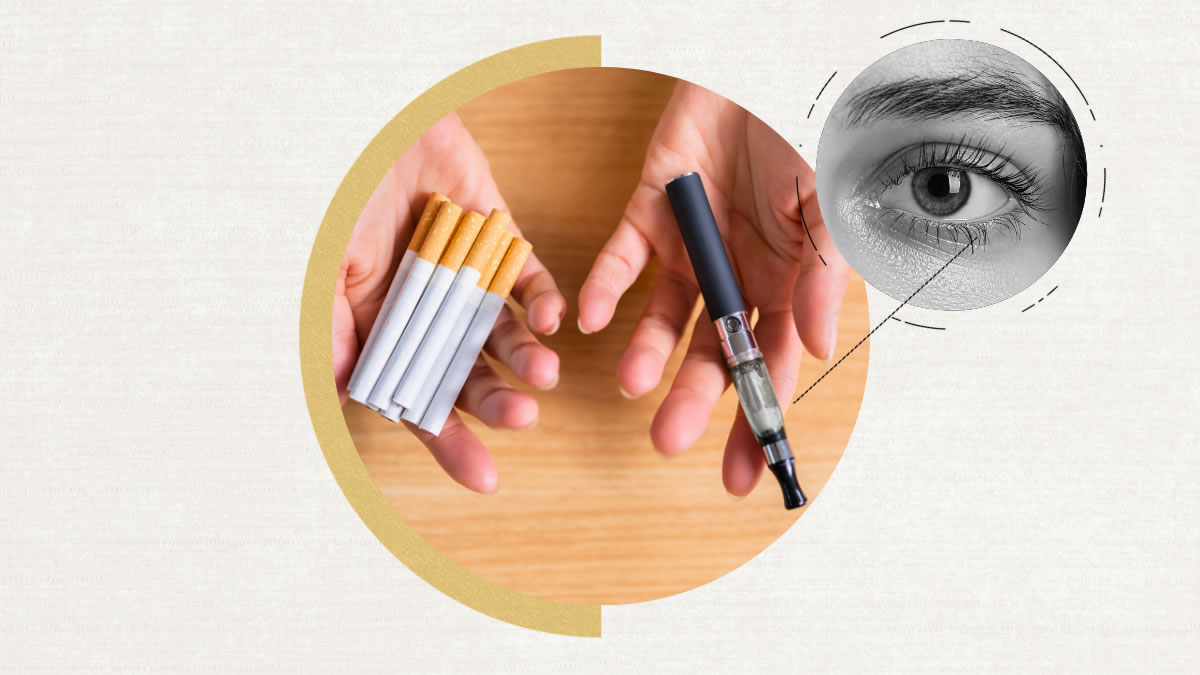
How Do Smoking and Vaping Damage Your Eyes? The Hidden Vascular Risks Explained
Both smoking and vaping severely impact ocular health by inducing vascular constriction and oxidative stress. Combustible cigarettes introduce tar and carbon monoxide, accelerating macular degeneration and cataracts. While vaping eliminates combustion, its high nicotine concentration—often equaling 20 cigarettes per cartridge—restricts oxygen to the optic nerve, risking permanent vision loss.
Demographic Shifts and the Anschutz Clinical Perspective
The landscape of nicotine consumption is fracturing along generational lines, bringing new clinical challenges to ophthalmology. According to 2024 data published in The New England Journal of Medicine, nearly 25.2 million adults in the United States continue to smoke combustible cigarettes, while 17.8 million utilize e-cigarettes. Crucially, the 18-to-24 demographic reports significantly higher rates of vaping than traditional smoking. This shift forces eye care specialists to confront a dual epidemic of ocular distress.
At the University of Colorado Anschutz Department of Ophthalmology, Dr. Stephanie Martich confronts these statistics daily. Operating out of the Sue Anschutz-Rodgers Eye Center, she treats a spectrum of blinding conditions directly exacerbated by nicotine habits. “We classically think of smoking as affecting the lungs and heart,” Dr. Martich notes, emphasizing a critical public health blind spot. The reality is that the delicate vascular network of the eye is highly susceptible to the chemical onslaught of both traditional and electronic nicotine delivery systems.
Combustible Tobacco: Oxidative Stress and Hypoxia
The physiological damage inflicted by combustible cigarettes is well-documented and devastating. In the short term, smokers frequently suffer from severe dry eye, chronic redness, and contact lens intolerance. Furthermore, the toxic load from cigarette smoke actively delays cellular healing, complicating recovery from routine procedures like cataract surgery.
Long-term exposure triggers a cascade of degenerative ocular diseases. Smoking actively reduces oxygen delivery to the eye by impairing blood flow—a state known as hypoxia. Simultaneously, it floods the ocular tissues with oxidative stress and systemic inflammation. This toxic combination accelerates the onset of macular degeneration (the deterioration of the central retina), cataracts (clouding of the lens), and diabetic retinopathy (blood vessel damage driven by high blood sugar). For older populations, whose bodies already struggle to repair vascular damage, decades of smoking can lead to profound, irreversible blindness.
The Vaping Paradox: Harm Reduction vs. Vasoconstriction
The vaping industry frequently positions its products as a safer alternative to smoking. From a purely respiratory standpoint, eliminating combustion removes tar and carbon monoxide. However, when evaluating ocular health, this “harm reduction” narrative requires intense clinical skepticism.
Dr. Martich offers a nuanced perspective: vaping is only “ever so slightly less harmful” to the eyes because it lacks combustion. The primary threat remains the sheer volume of nicotine. Modern vape cartridges utilize highly concentrated nicotine salts. Previous clinical research indicates that a single standard vape pod can contain the nicotine equivalent of 20 combustible cigarettes.
Nicotine is a potent vasoconstrictor. It aggressively narrows blood vessels, starving the retina and the optic nerve of essential oxygen. Because the blood vessels in the human eye are among the most delicate in the entire body, they are uniquely vulnerable to these vascular changes. Chronic vasoconstriction accelerates cellular aging and places immense stress on ocular tissues, directly increasing the risk of glaucoma—a progressive disease characterized by irreversible optic nerve damage.
| Health Metric / Risk Factor | Combustible Cigarettes | E-Cigarettes / Vaping |
|---|---|---|
| Primary Mechanism of Harm | Combustion, Tar, Carbon Monoxide | Severe Vasoconstriction, Chemical Solvents |
| Nicotine Delivery Load | Standard (approx. 1-2mg absorbed per cigarette) | Extremely High (Up to 20 cigarettes per cartridge) |
| Tear Film Disruption | High (Direct smoke irritation) | High (Propylene glycol and aerosol exposure) |
| Long-Term Disease Risk | Macular Degeneration, Cataracts, Glaucoma | Glaucoma, Diabetic Retinopathy, Thyroid Eye Disease |
Chemical Solvents and Tear Film Degradation
Beyond nicotine, the base liquids used in e-cigarettes present novel threats to the ocular surface. Vapes rely on propylene glycol—a synthetic liquid solvent—alongside various artificial flavoring agents. When aerosolized and exhaled, these chemicals interact directly with the eyes. They actively break down the eye’s lipid layer, increasing tear evaporation and triggering localized inflammation. This chemical exposure not only worsens dry eye symptoms for the user but poses a significant secondhand risk.
Secondhand aerosol exposure is particularly dangerous for children. Their developing ocular surfaces are highly sensitive to environmental irritants. Chronic exposure to exhaled vape clouds or cigarette smoke can trigger severe allergic responses and lay the groundwork for future ocular pathologies.
Reversibility: Can Ocular Damage Be Undone?
The medical community is still mapping the exact dose-response relationship for both smoking and vaping. It remains unclear precisely how much exposure guarantees permanent vision loss, or why certain genetic profiles are more vulnerable to nicotine-induced hypoxia. However, the clinical consensus on cessation is absolute.
Quitting nicotine yields immediate vascular dividends. Once the vasoconstrictor is removed from the bloodstream, circulation normalizes. Oxygen delivery to the retina and optic nerve is restored, and systemic inflammatory markers drop. For patients suffering from chronic dry eye, cessation often resolves symptoms entirely.
Yet, there is a grim caveat. While surface irritation and blood flow can recover, structural damage cannot. If nicotine-induced hypoxia has already caused severe optic nerve death (glaucoma) or destroyed the central macula, that vision loss is permanent. Dr. Martich’s mandate is clear: reducing or eliminating nicotine intake at any age is the single most effective intervention to preserve long-term sight.
- Reference: https://news.cuanschutz.edu/ophthalmology/smoking-vaping-eye-health
by
Tags: