

Recent medical research from Estonia and South Korea confirms that vaping and “dual use” (combining e-cigarettes with traditional smoking) trigger severe atypical lung diseases, epigenetic cell programming, and systemic metabolic syndrome. These findings debunk the “90% safer” narrative, revealing risks from heavy metal toxicity and flavor-induced “popcorn lung.”
The long-standing marketing narrative that e-cigarettes are a “90% safer” alternative to combustible tobacco is rapidly crumbling under the weight of modern cellular research. While early assessments focused primarily on the absence of tobacco combustion, current clinical data paints a far more sinister picture. Leading oncologists and pulmonologists now warn that we are entering a “latency period” for a new generation of chronic illnesses. The reality is that vaping doesn’t just mimic the damage of smoking—it introduces entirely new pathologies that the human respiratory and metabolic systems are not equipped to handle.
The Heavy Metal Payload of High-Power Devices
One of the most significant shifts in vaping technology has been the move toward high-powered devices. While these provide larger clouds and more intense flavor, they also act as efficient delivery systems for heavy metals. According to Professor Alan Altraja, head of the lung clinic at Tartu University Hospital, these devices can deposit hundreds of micrograms of toxic metals directly into the lung alveoli with a single puff.
When e-liquids are heated at high temperatures, the metal coils—often composed of nickel, chromium, lead, arsenic, and cadmium—leach into the vapor. These particles are not merely inhaled; they are deposited. Once trapped in the lung tissue, they trigger chronic inflammation and fibrotic changes, effectively scarring the lungs from the inside out. This isn’t just “vaping”; it is the inhalation of aerosolized industrial metals.
Epigenetic Programming: A Ticking Cancer Bomb
Oncologists are particularly alarmed by the epigenetic impact of e-cigarette vapor. Professor Jana Jaal, a leading hematology-oncology specialist, notes that vaping triggers oxidative stress that alters how genes are expressed in human cells. This process essentially “programs” lung cells into a precancerous state long before a tumor actually appears.
Unlike conventional smoking, which has a well-documented timeline for cancer development, vaping is a relatively new phenomenon. We are currently in the early stages of the latency period. Chemicals in the vapor inhibit the enzymes responsible for repairing damaged DNA, while sweet additives transform into genotoxic aldehydes when heated. The medical community is now asking a terrifying question: are these genetic changes reversible? Currently, there is no evidence to suggest they are.
The Flavoring Paradox: Food-Safe vs. Lung-Safe
A common industry defense is that e-liquid flavorings are “food-grade” and approved for consumption. This is a dangerous category error. The human digestive tract is designed to process chemicals like cinnamaldehyde and diacetyl; the lungs are not. The respiratory system evolved exclusively to process air.
When inhaled, these flavorings paralyze the cilia—the microscopic “brooms” that clear pollutants from your airways. This paralysis leaves the lungs defenseless against viruses and bacteria. Specifically, the inhalation of diacetyl is directly linked to bronchiolitis obliterans, or “popcorn lung,” a destructive and irreversible condition that causes the smallest airways to narrow and scar. Furthermore, hot vapor impairs alveolar macrophages, the lungs’ primary cleansing cells, making vapers significantly more susceptible to severe cases of influenza and COVID-19.
Metabolic Syndrome and Systemic Risks
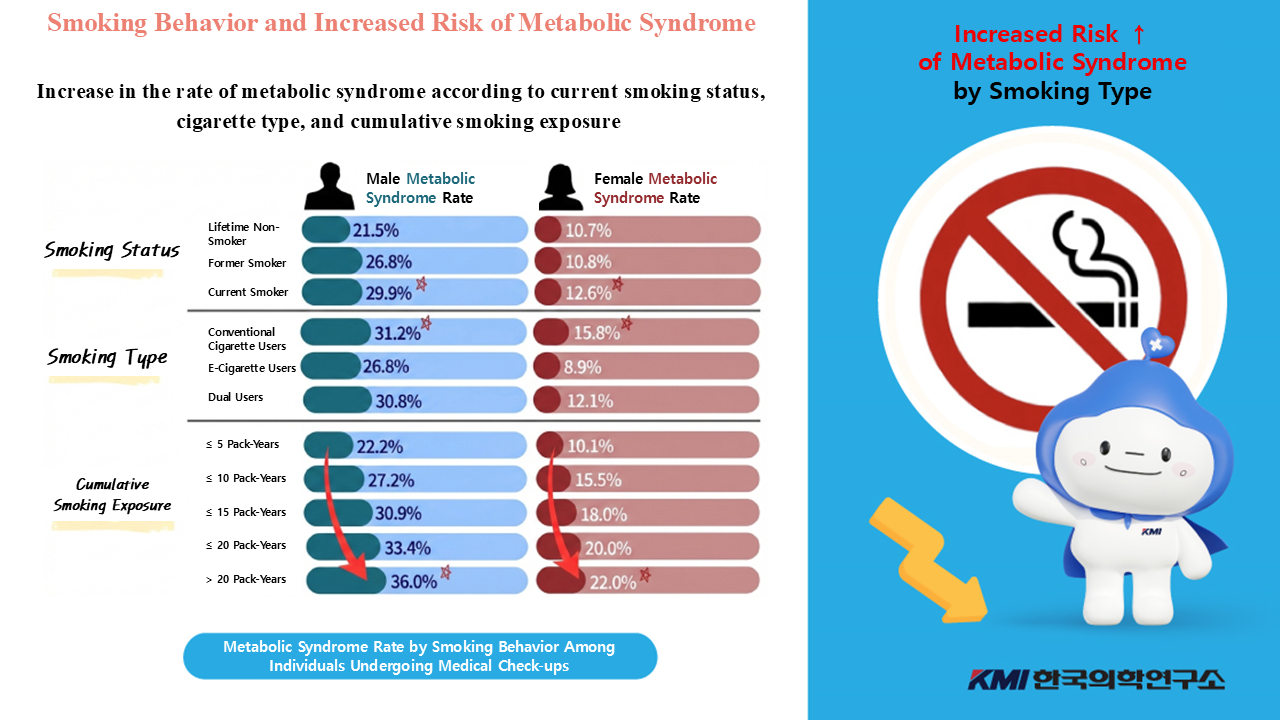
The damage isn’t confined to the chest cavity. A massive study by the Korea Medical Institute (KMI), involving 3.05 million individuals, has established a clear link between vaping and metabolic syndrome. This condition—a cluster of risks including high blood pressure, high blood sugar, and abnormal cholesterol—increases the likelihood of heart disease and stroke.
The KMI data reveals that the prevalence of metabolic syndrome in current smokers and vapers sits around 30%, compared to 21.5% in non-smokers. Interestingly, the risk scales with “pack-years” of exposure. Those with over 20 pack-years of exposure saw metabolic syndrome rates climb to 36%. This suggests that nicotine delivery systems, regardless of the medium, interfere with systemic metabolic function in ways that are only now being quantified on a population-wide scale.
The Myth of the “Dual User” Benefit
Many smokers attempt to “cut down” by using e-cigarettes during the day and smoking at night. This “dual use” strategy is a medical disaster. Data from both Estonian and South Korean researchers shows that dual users achieve zero health benefits. Instead, they subject their lungs to a double burden: the combustion byproducts of traditional cigarettes and the chemical/metal cocktail of e-liquids.
Dual users often maintain a higher level of nicotine dependence, making it even harder to quit either habit. Biomarker studies indicate that toxin levels in the body only begin to drop when a smoker reduces their intake to fewer than 10 conventional cigarettes per day—a threshold most dual users never reach. For these individuals, the risk of cardiovascular disease and atypical lung injuries like EVALI (e-cigarette or vaping product use-associated lung injury) remains at a peak.
Atypical Diagnoses and the Future Burden
Doctors are now encountering a range of “atypical” lung injuries that don’t fit the classic profile of smoker’s cough or COPD. These include:
- Eosinophilic pneumonia: A rare type of pneumonia caused by a buildup of white blood cells in the lungs.
- Alveolar hemorrhage: Actual bleeding within the lung’s air sacs.
- Organizing pneumonia: Inflammation of the small airways and alveoli.
These conditions are notoriously difficult to diagnose because standard tests aren’t designed to look for them. Patients often require intensive care and mechanical ventilation for what started as a “safer” habit.
The most concerning demographic shift is among the youth. In Estonia, experimentation now commonly begins between the ages of 12 and 14. By 2024, nearly 28% of teenage girls were regular vapers. This early initiation threatens the anatomical development of the lungs, causing a permanent decline in respiratory function before the body is even fully grown. We are essentially witnessing a public health experiment with an entire generation as the test subjects.
The medical consensus is shifting: the only health-friendly measure is total cessation. Promoting vaping as a harm-reduction tool is increasingly viewed by senior physicians as an “anti-public health” move that ignores the systemic, epigenetic, and atypical damage being done to the human body.