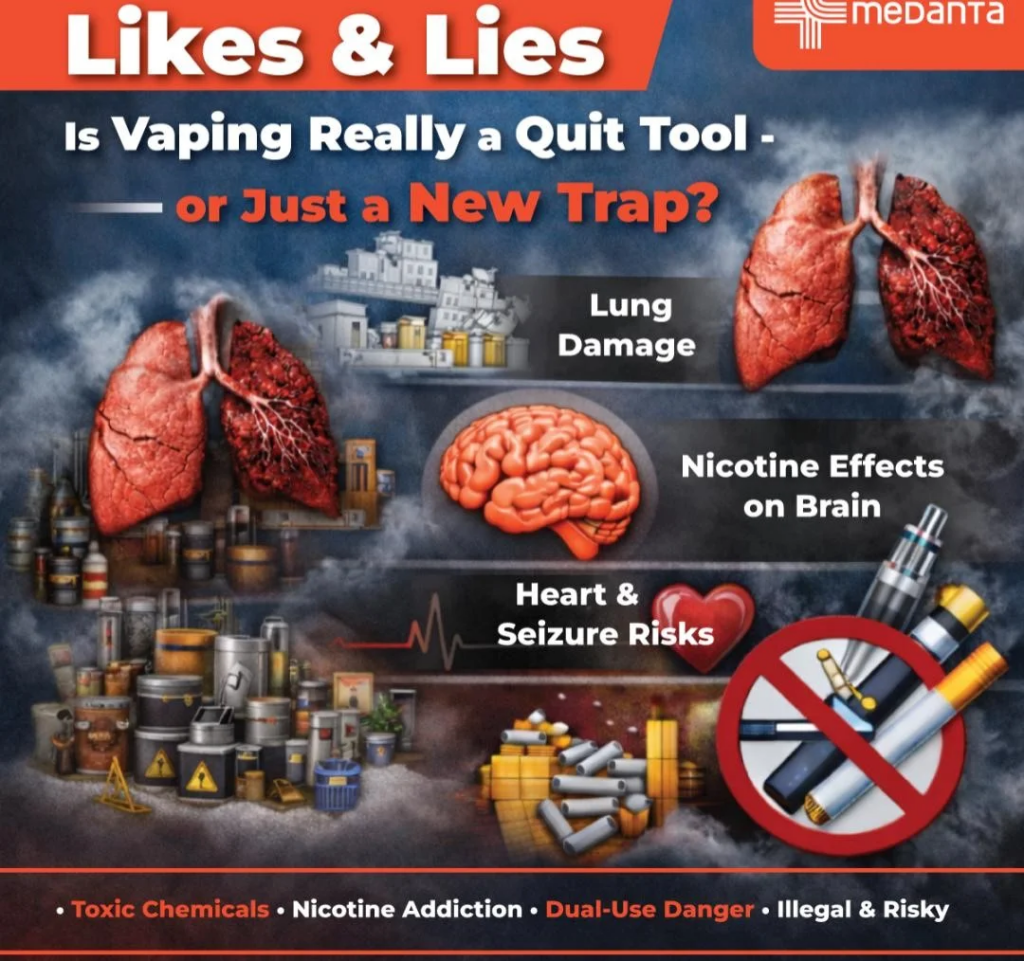
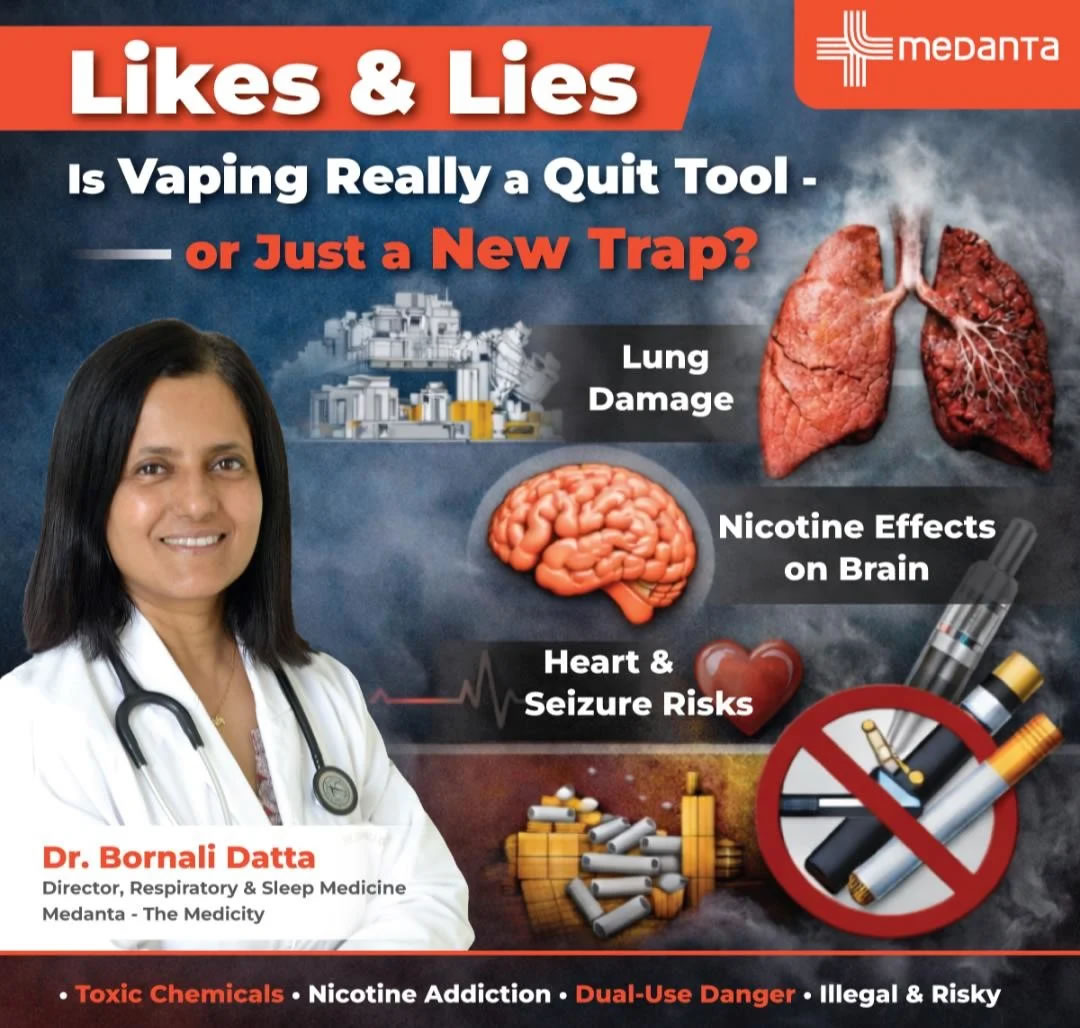

While vaping is often marketed as a safer alternative to smoking, emerging evidence suggests it is far from risk-free and may not be an effective quit tool for many. Vapes expose users to harmful aerosolized chemicals that can damage lung tissue, impair brain function due to “nicotine flooding,” and potentially harm cardiovascular health. Furthermore, many users end up with dual addiction to both vapes and cigarettes.
Key Takeaways:
- Lung Damage: Aerosolized chemicals can trigger inflammation and respiratory distress.
- Brain Impact: High nicotine concentrations can impair memory and cognition.
- Dual Use Risk: Many users continue to smoke while vaping, increasing overall harm.
- Illegal Availability: Despite a ban, vapes remain easily accessible in India.
Vaping refers to the inhalation of an aerosol produced by heating a liquid containing nicotine and flavorings, a practice often promoted as a harm reduction tool but increasingly linked to serious health complications. In India, where tobacco use has a long history ranging from hookahs to bidis, the rise of vaping presents a complex new public health challenge.
The Hidden Dangers: Lungs, Brain, and Heart
Vapes work by heating liquids to create an inhalable aerosol. Researchers suspect that the chemicals in this aerosol can damage lung tissue and trigger inflammation, leading to symptoms such as shortness of breath, chest pain, and in severe cases, hospitalization.
Beyond the lungs, high nicotine concentrations can cause “nicotine flooding,” overwhelming the brain and impairing memory and learning. Studies also indicate potential cardiovascular risks, with vaping temporarily impairing blood vessel function. The US FDA is even investigating links between vaping and seizures, particularly in youth.
The “Quit Tool” Myth and Dual Use
Contrary to the narrative that vaping helps smokers quit, many individuals end up using both vapes and traditional cigarettes. This “dual use” offers no health benefit and may increase risks. Additionally, young people who experiment with vaping are more likely to transition to smoking later in life.
Despite a nationwide ban in India, vapes remain widely available through illegal channels. Health experts strongly caution against viewing e-cigarettes as a harmless substitute and recommend medically supervised methods for quitting nicotine entirely.