
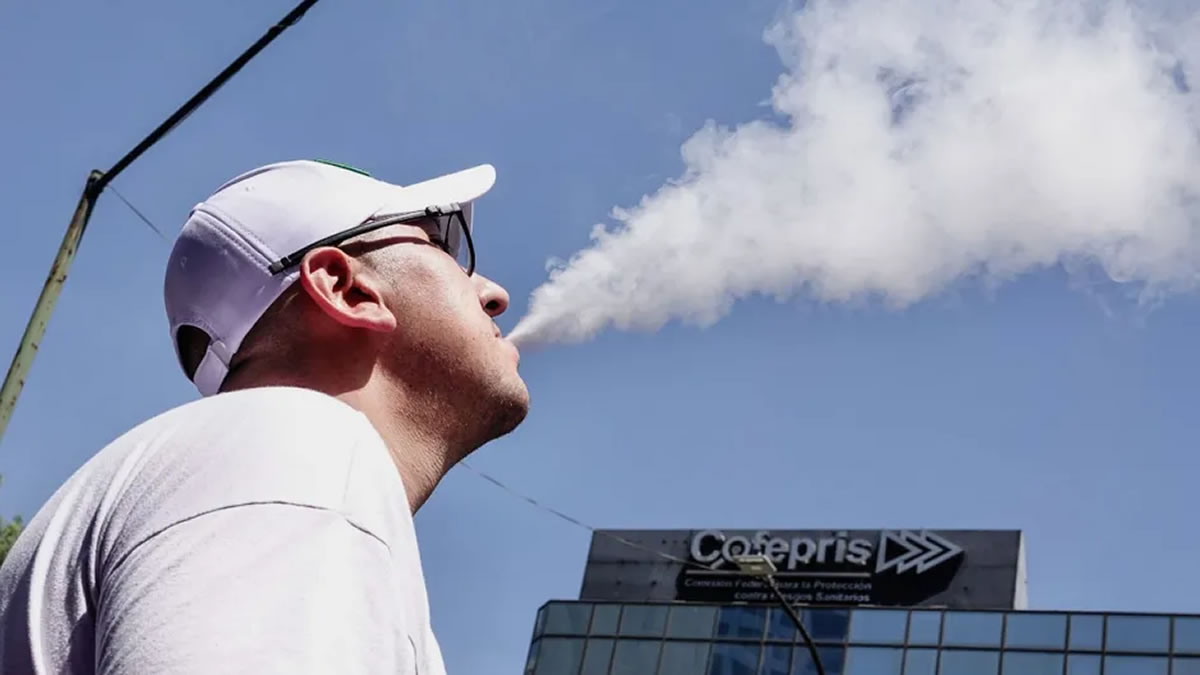

The number of Mexican adolescents using electronic cigarettes, or vapes, nearly doubled between 2022 and 2023, jumping from 500,000 to 955,000 users aged 10-19, according to the National Health and Nutrition Survey (Ensanut). Amidst this surge, Mexico’s Congress has approved reforms to the General Health Law, prohibiting the production, manufacture, import, export, sale, and supply of these devices, citing public health protection for youth. While personal possession and consumption are not currently penalized, the move underscores growing alarm over the health risks posed by vaping.
Vapes work by heating a liquid cartridge with a battery to create an inhalable aerosol. Often marketed as a safer alternative to smoking due to the lack of combustion, studies reveal a more complex and dangerous reality. A study by Mexico’s Federal Commission for Protection against Sanitary Risks (Cofepris) found that vape aerosols are not just water vapor but a mixture of up to 33 potentially harmful substances. While packaging typically lists ingredients like propylene glycol (used in antifreeze), glycerin, nicotine, and flavorings, Cofepris identified nearly 30 undisclosed volatile compounds.
These hidden ingredients include:
- Dimethyl Ether: A flammable substance used to burn off warts.
- Eugenol: Used as a mild dental anesthetic and to euthanize fish.
- Linalool: An alcohol used as a natural insecticide.
- Benzyl Alcohol: A solvent found in soaps and cleaning products.
- Menthol: Which Cofepris notes increases addiction potential by facilitating cellular connection.
Furthermore, overheating vape liquid can produce formaldehyde, a known carcinogen. The American Cancer Society and the U.S. Centers for Disease Control (CDC) warn that flavorings safe for ingestion may be harmful when inhaled, as lungs process substances differently than the digestive system.
The addictive nature of nicotine in vapes is also a major concern. Research indicates nicotine triggers endorphin release, creating a short-lived euphoria that drives repeated use and dependence. The U.S. Surgeon General has warned since 2018 that adolescent nicotine exposure can harm brain development related to learning, memory, and attention. Clinical trials suggest vape nicotine impacts brain function similarly to traditional cigarettes.