
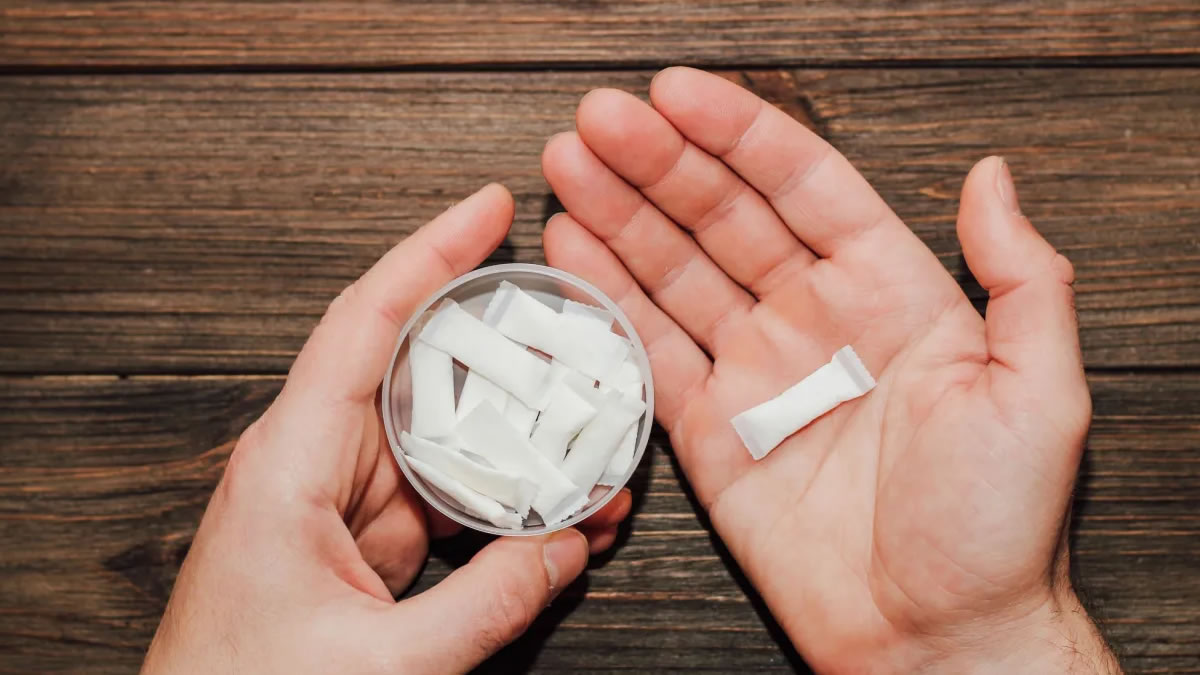

The Brazilian Society of Pulmonology and Tisiology (SBPT) has launched a national manifesto urging federal lawmakers to reject the legalization of electronic smoking devices and nicotine pouches. This urgent legislative push follows a World Health Organization (WHO) report revealing that global sales of nicotine pouches spiked by 50% in 2024, reaching a staggering 23 billion units.
Commonly promoted by illicit markets as a “safe alternative” to smoking because they do not involve combustion, nicotine pouches are rapidly becoming a public health hazard. Placed between the lip and the gum, these permeable packets release nicotine directly into the bloodstream through the oral mucosa.
Because these products are illegal and unregulated in Brazil, their exact chemical compositions remain unknown. However, data from ACT Health Promotion shows that while a traditional cigarette delivers about 1mg of nicotine, commercial pouches release between 4mg and 18mg. Some extreme variants have been documented containing up to 120mg per unit, drastically accelerating addiction.
“Chronic use of these pouches can cause severe nicotine addiction, gingivitis, nausea, headaches, and cardiovascular issues like hypertension,” warns Dr. Maria Enedina Scuarcialupi, coordinator of the SBPT Smoking Scientific Commission. Yale Medicine researchers also warn that because pouches are smokeless and odorless, they are highly discreet, making it incredibly easy for children and adolescents to develop undetected addictions.
Nicotine Pouches vs. Nicotine Patches: Understanding the Difference
Health experts emphasize that recreational nicotine pouches should never be confused with medically approved Nicotine Replacement Therapy (NRT) tools, such as transdermal patches.
| Feature | Nicotine Pouches (Recreational) | Nicotine Patches (Medical) |
|---|---|---|
| Primary Purpose | Recreational use / Unregulated consumption | Clinically supervised smoking cessation |
| Absorption Method | Rapid, intense absorption via oral mucosa | Slow, controlled release through the skin |
| Dosage Control | Highly variable and unpredictable (4mg to 120mg) | Standardized, gradually decreasing doses |
| Legal Status in Brazil | Strictly prohibited (Anvisa RDC 46) | Approved and regulated medical product |
In Brazil, the importation, sale, and advertisement of nicotine pouches have been strictly prohibited since 2009 under Anvisa’s RDC No. 46. The regulation outlaws any product claiming to replace cigarettes or serve as an unapproved smoking cessation aid. Anvisa is currently hosting public consultations to strengthen these national tobacco control strategies and protect future generations from nicotine dependency.